


Follow us
Add us as a preferred source on Google
The tug of war between supporters and football’s power brokers has never felt more strained than it does at this very moment. Club owners, commercial interests, TV companies and even the man that runs FIFA seem to be pulling the sport away from the people who make it truly matter. It’s time to tug back, then, as we unveil FourFourTwo‘s plan to reclaim the beautiful game for the fans…
Tickets
1. Lower ticket prices
FFT editor James Andrew explains why something must be done about the cost of entry to football:
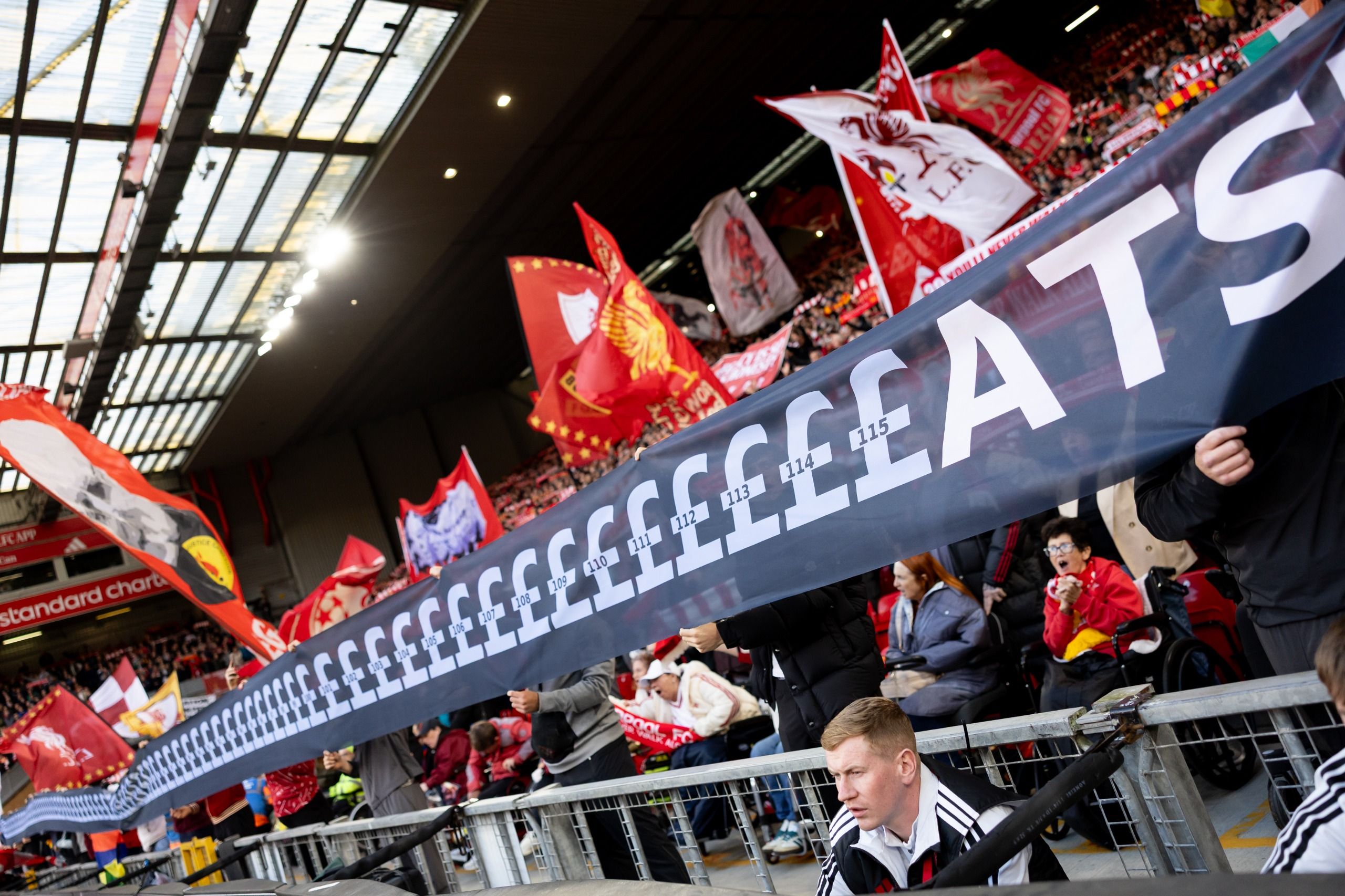
Back in 2001, you could go to the supermarket and buy a loaf of bread for 51p, plus a pint of milk for 37p, then stop off and have a pint in the pub for £1.90. You could also take a family of four to watch my team Fulham play a Premier League game at Craven Cottage for £80. That’s £80 in total, not each.
Fast forward 25 years and that bread has risen by 175 per cent to £1.40, a pint of milk is now 65p, up 76 per cent, and a pint is £5.50 – an increase of 189 per cent. Inflation has hit everyone, but still nothing comes close to the way the cost of going to football has risen. This season, sitting in the Johnny Haynes Stand for a Fulham match would cost £332 for those same four tickets, an increase of 315 per cent.
Across the Premier League, prices have risen exponentially, squeezing a lot of fans out of the game – even though those rises are a choice for clubs, not a necessity. Typically, matchday income generates seven to 15 per cent of total club revenue, depending on stadium size and pricing. Higher ticket prices yield only £2m or £3m in extra income for the top clubs. In an era dominated by exorbitant transfer fees and colossal wage bills, that’s loose change.
Some fans also feel clubs favour one-time ‘tourist’ visitors over local, loyal supporters. From the club’s perspective, there’s a higher chance they’ll spend money in the club shop, and buy food and drink in the ground. A regular fan might stay in the pub until just before kick-off. But that outlook is short-termism.
The Covid pandemic and football being played behind closed doors resulted in us being told “football without fans is nothing”, but have clubs learned that lesson? If you price out fans who’ve been going for years, you lose the atmosphere that the ‘tourists’ have travelled to experience – it’s lose-lose.
Added to that, any of the bottom 10 clubs could be relegated during a bad season, then they could find themselves in a situation where long-term fans have been priced out and pissed off, but the ‘tourists’ don’t want to go to a Championship game on a Tuesday night.
So what’s the solution? One success story in the Premier League in recent years has been the £30 cap on ticket prices for away fans. If that was replicated in the home stands – even at, say, £40 for adults – it could keep ticket prices affordable.
Another idea is to take the lead from Whitney Houston, who sang: “I believe the children are our future.” If you want to ensure young fans are experiencing football from the stands rather than on TV, you need to protect family areas inside the grounds and keep tickets both affordable and accessible.
Every fan will have their own personal breaking point. If the cost of football continues to rise like it has done over the past quarter of a century, it’s scary to think what the stands may look like in 2051.
Kick-off times
2. Less messing about with kick-off times
Opinions on whether to scrap the Saturday 3pm TV blackout remain divided – when we polled supporters, around a quarter wanted it to stay, fearing the impact that lifting it could have on attendances and finances below the Premier League. While it remains in place, inevitably some kick-off times will move, but choices could be more considerate, particularly for away fans travelling long distances.
Do we really need games at 8pm on a Saturday? Was it fair on Cardiff supporters for their game at Middlesbrough to be moved to 12.30pm? And how many TV viewers was Crawley vs Cheltenham really pulling in on the red button, as one of seven EFL games played at lunchtime recently, to make it worth inconveniencing fans who actually wanted to go? Arguably, the 3pm blackout rule could be tweaked so it only applies to the top two divisions.
Mascots
3. Stop clubs charging kids to be mascots
Last term, Peter Crouch accompanied his heroes onto the pitch as one of the pre-game mascots at non-league Farnham Town. OK, he was 44, and the whole thing was a fantasy football forfeit, but did Farnham charge him? No, they did not.
Being a mascot is a day a kid never forgets, but some clubs have decided there’s money to be made from it. At Crystal Palace, silver and gold packages range from £255 to £520, making it difficult for less privileged families. At all clubs, it should be free.
Social media
The online world is increasingly becoming the wild west – made-up quotes, made-up transfer rumours from faceless accounts, it’s hard to tell what’s real and what isn’t. Even more serious is the vitriol aimed at footballers online – time and again, players are complaining of the most awful comments being directed at them, with racism worryingly prevalent.
Social media companies must do more to deal with it, and create an environment where it’s harder for these things to happen in the first place.
The FA Cup
5. Move FA Cup semi-finals from Wembley
An FFT poll previously showed that fans were overwhelmingly in favour of switching the FA Cup semi-finals to different venues – it’s one of several factors that has devalued the final itself and affected the competition’s historic reputation.
While we’re at it, the final should be after the end of the Premier League season, and replays should be reintroduced – at least for the first and second rounds, given it was top-flight teams who wanted the change. Force everyone in hospitality at Wembley to get back to their seats for the start of the second half, too…
Agents
6. Reduce agent fees
Between February 2025 and February 2026, FA data suggested clubs in the top five divisions of English football shelled out a huge £548m in fees to agents.
Transfer fees are equally obscene, but at least that money is helping other clubs and circulates around the pyramid – that’s not the case when money goes to agents.
Commentators
How did Sam Matterface respond to Marcus Rashford’s goal against Croatia at the World Cup? By quoting lyrics from Ella Langley song Choosin’ Texas, that he absolutely in no way had written down beforehand and intended to use no matter who scored and how the goal went in. The game was in Dallas, get it?
He’s not the only one who does it – commentators have to prepare for games, of course, but give us facts, not cringy pre-rehearsed lines.
VAR
8. Abolish VAR

Chris Nee outlines why enough is enough and video technology must go:
This October, Brighton’s Pascal Struijk was sent off for the denial of an obvious goalscoring opportunity against Sunderland. Four days later, the defender’s red card and suspension were overturned.
Struijk’s collision with Wilson Isidor wasn’t even given as a foul by the referee until he was called over for a VAR review, and a red card followed. The details of the incident don’t matter as much as the implications. Not for the first time, a referee made a decision that was later determined adequate, yet overturned it in a VAR intervention. That VAR is undoing correct decisions proves it is getting involved when it was never meant to.
A decade into football’s doomed video review experiment, it’s easy to forget that almost every decision made by referees is subjective and any pursuit of fact in a game of interpretation is utterly futile. The major miscarriages of justice VAR was supposed to prevent are rare.
But the best reason to scrap VAR outright isn’t to do with accuracy or margins, nor lines or toenails offside, but the ruinous effect that it’s having on the sport. Even if the process could be deployed perfectly and quickly – it can’t – the imperative to review every goal for an unnoticed infringement is detrimental to the way supporters experience football.
VAR has stripped the moments that matter of their elation, torn asunder the fabric of the offside law and turned handball into a farce. That such law tweaks have been allowed to leak into competitions that don’t even use VAR is a practical result of a philosophical blunder; football was designed to be simple and universal.
Video reviews created a different code and it’s time the authorities recognised that it’s an inferior one. Football is a distorted game under the VAR regime – a game in which a goal might not be a goal, a yellow card might be a red card, offside might be ignored for 30 yards of play before being ruled by millimetres.
This damage was inflicted for the wrong reasons and VAR has been clamped onto the game with total disregard for what makes it special. There’s no upside, and no solution.
Forget improvements. This isn’t going to be fixed because it can’t be fixed. Its flaws are inherent and they’re fundamentally anathema to football. There’s only one decision that needs to be overturned, and it’s the biggest VAR decision of all.
Owners
9. Crack down on rogue owners
Football’s fit and proper person test is a thorny business. When owners go rogue, authorities are criticised for allowing them to buy the club in the first place, although sometimes when you look back to the time of purchase, there was no legal reason to disqualify them, and the same fans were urging the authorities to approve the takeover quickly – either to get rid of the previous owner, or get hold of cash for transfers.
Things often go wrong after the purchase instead – the club doesn’t succeed on the field, the owner is criticised, falls out with fans, petulantly takes his or her ball home, then a financial crisis ensues. What’s needed is a better solution when that happens – often, such crises drag on for far too long, causing untold damage to the club and the people who work there. Greater mechanisms are required so authorities can quickly remove an owner when they don’t pay wages or meet responsibilities to their club.
EFL Trophy
10. Remove U21 teams from the EFL Trophy
It’s a decade since the competition was revamped to include underage teams, largely from Premier League clubs – that inclusion remains as unpopular as ever among EFL fans, who feel disrespected that their own senior team must play an under-21 side.
This September, just 278 people watched Bromley face Brentford’s U21s – last month, Richarlison scored for Spurs’ U21s at Cheltenham, which we’re not sure was entirely the idea of the whole thing. At least an U21 team has never reached the final – one end of Wembley being almost entirely empty would be a bad look.
Half and half scarves
11. Ban half and half scarves

Presumably someone, somewhere, is buying them, otherwise people wouldn’t keep making them, but the entire industry is a mystery. Why would you want to hold up a scarf during a game bearing the name of the opposition? You might as well sing their club anthem and cheer for their goals while you’re at it – come on, people, we’re better than this.
Football isn’t a gentle day out at the tennis, and even then no-one ever sold Federer and Nadal half and half scarves – largely because it was summer and 30 degrees, but that’s beside the point. When we polled fans, 91.6 per cent said there was no situation in which half and half scarves were ever acceptable.
Replica shirts
12. Reduce the cost of replica shirts
If you wanted to buy an England shirt for the World Cup this summer, it would have set you back £90 for a replica, or £135 if you wanted one “with the same fit and performance as your favourite national team player”. For the 2010 tournament, a replica cost £45; even that felt a lot at the time. Prices have become silly – instead of charging so much just for a shirt, maybe add an extra fee for anyone who buys a full adult replica kit and wears it out and about, to really deter the full-kit wankers.
Franchise clubs
13. Refuse more franchise clubs
More than two decades on, has Wimbledon’s move to Milton Keynes ever been forgiven by fans around the country? No, and it never will be – not least because MK Dons still play in a stadium that’s half-full at best, with among the EFL’s worst atmospheres. In Scotland, there was controversy when Clydebank were bought out and moved to Airdrie in 2002, after the original Airdrieonians went out of business.
There has been talk recently that Vancouver Whitecaps, who made last year’s MLS Cup final, could move to Las Vegas – no community should ever lose their club in such fashion.
Financial rules
14. Sort out the mess of financial rules

Chris Flanagan analyses the Manchester City scandal – and how to stop it being repeated:
When new regulations are released in sport, esteemed Formula 1 pundit Martin Brundle often says that people read them once to understand them, then a second time to figure out how they can get around them.
Once football’s Financial Fair Play and Profit & Sustainability rules were introduced in the early 2010s, it was inevitable that some clubs would try to find workarounds by bending or breaking the rules. The same has happened in other sports.
Manchester City’s guilty verdict in September plunged English football into arguably the biggest crisis of its long history – never before had the legitimacy of several league titles been thrown into question. Clearly, their case merits stern sanctions – as punishment for the unfair advantage gained, and as a deterrent. A plea sometimes made in these situations is ‘Won’t you think of the fans? They don’t deserve to be punished.’ It’s true to an extent, but did supporters of other clubs not suffer because of City’s rule-breaking?
Once their situation has been resolved, English football needs to think seriously about the best way forward. City’s has been the most extreme case, but they’re far from the only club to have broken financial rules over the past 15 years. Of the Premier League champions during that period, Chelsea also did so – even Leicester, who exceeded the permitted loss en route to promotion from the Championship two seasons before their shock 2016 triumph.
The list of other clubs to have broken the rules is long: Nottingham Forest, Everton, Bournemouth when they were promoted to the top flight for the first time, and plenty more across the English leagues. Did some gain a lasting advantage over others who obeyed the rules – an advantage that outweighed the punishments they were handed?
Only three teams have won the Premier League title in that period without breaking domestic financial rules at some stage – Liverpool, Arsenal and Manchester United – hence why the solution is complex.
Arguably, the punishment for any club that breaches financial rules should be so draconian that no-one ever does it again. Otherwise, in any given season, how do we know who’s cheating and who isn’t? Are we all living a lie?
On the other hand, do the Premier League’s rules mean only the three biggest clubs can actually win the title without eyebrows being raised? Would Blackburn have been able to win it today? Should smaller teams be prevented from ‘buying’ success, or does that take away a dream for 95 per cent of clubs? That’s before we consider other side effects we’ve seen because of the rules, like clubs effectively being encouraged to sell popular homegrown stars, as they count as ‘pure profit’.
Whatever your view on financial regulations – and it may depend on the size of the club you support – the City situation has been awful for football. Sorry, Ole Gunnar Solskjaer or Brendan Rodgers, the team you managed didn’t win the title – or maybe it did, who really knows any more? Either way, it’s really not a whole lot of use to them now. Those seasons are long gone.
If financial rules are to stay, we can’t have more cases where we’re investigating things that happened a decade ago, where it takes years to reach a verdict. Clubs who are cheating must be caught in real time, in the season it happens, so we can be totally sure the right teams are celebrating in May, or the regulations will forever doom the domestic game to an array of asterisks.
As it is, we’ve ended up with the biggest mess English football has ever seen. If clubs start suing over it, where does it end? In a situation like this, ultimately, nobody wins.
TV
15. Fewer TV subscriptions
If you like watching a variety of football, you’ll need a subscription to Sky (Premier League, EFL, Scottish Premiership, WSL), TNT (Premier League, European games, FA Cup), Amazon Prime (Champions League, some internationals), Premier Sports (Scottish Premiership, La Liga), Disney+ (Women’s Champions League, La Liga), DAZN (National League), Apple (MLS) and others too.
Who can afford all that? Laws stop one TV company from holding a monopoly, but it’s cheaper for fans if fewer channels hold the rights. More free-to-air football would help – the return of occasional EFL games to ITV has been good, but last season was the first time TNT didn’t offer the Champions League final for free on their YouTube channel. Gabriel Magalhaes was probably grateful…
Parachute payments
16. Solve parachute payment issues

The intention was to prevent clubs from immediately being in financial trouble when they’re relegated from the Premier League, but it’s created another problem. As top-flight TV money has risen and risen, so have parachute payments, which has handed relegated clubs an even bigger advantage over the rest of the Championship.
As a result, clubs without parachute payments feel they have no choice but to spend beyond their means to compete – some end up in financial trouble. Talks have been held for some time between the Premier League and EFL as they’ve sought a better solution.
Yellow cards
17. No yellow cards for celebrations

If you ever stick the ball in the onion bag during a professional game, having worked all your life to get to that point, don’t get too excited or, heaven forbid, show any indication you’re enjoying yourself. Instead, pull this checklist out of your socks. Don’t: take your shirt off. Don’t: hug the fans. Don’t: run the length of the field and celebrate in front of the away fans at the Etihad, particularly if your name’s Emmanuel Adebayor, even though it was funny to everyone apart from Arsenal supporters.
In all three cases, the decision is yellow card. Or how about we all just live in the moment, eh? Ian Wright agrees with us.
Players
18. Prevent clubs stockpiling players
The big clubs now have such a huge financial advantage that they can sign player after player and keep them on their books when they’re nowhere near the first team – either because they can’t get rid of them, or just on the off chance they might need them.
At Chelsea, they ran out of space in the dressing room at the training ground – players had to get changed in the corridor and some later went into a ‘bomb squad’, forced to train separately because the number of players on their books was simply too big for everyone to train together. The Blues typically have more than 20 players on loan too – while players are no doubt paid well by such clubs, it’s not always beneficial for their career.
Shinpads
19. Ban gloves and tiny shinpads
OK, we’ll give goalkeepers a free pass on the gloves, even if it would add an extra level of chaos to the game, as they try to catch a slippery wet ball during the winter. Everyone else, absolutely not. If you’re feeling cold, how about running around a bit? As for players who go for the gloves-and-short-sleeves combo, instant red.
Snoods were thankfully banned in 2011 – now, low socks and tiny shinpads are the epidemic. Players might as well just write, “I’m a maverick, me” on the back of their shirt – you’re impressing nobody, mate, and don’t blame anyone else if you get injured. Now do us a favour and put some tackles in…
FIFA
20. Reform FIFA
Henry Winter argues that while Gianni Infantino looks set to remain as president, the governing body must make changes:
The governing body of the world game, FIFA, is not only at a crossroads, it has lost its way. Damaging events before, during and after the World Cup confirmed that. FIFA could be a force for good if it found the right way again.
That requires extensive work to restore lost trust, beginning with openness and greater accountability. That requires independent lawyers in place throughout the organisation, ensuring correct governance. That requires representatives from fan and player organisations embedded in the building, providing oversight on decision-making. To improve FIFA, this early-warning system requires installation, starting with ensuring that commercial operations are kept separate from the president’s office.
In any debate about FIFA, it’s important to distinguish between the organisation and the presidency. Unfortunately, they have become blurred and, for many onlookers, FIFA is Gianni Infantino. That says everything about the flawed culture at FIFA, that allows one man too much power, and the flawed nature of Infantino, who so obviously has a weakness for people with power, as shown by his smitten courtier’s behaviour with Donald Trump.
Football is the world’s game – billions are transfixed by it and the men’s World Cup is the pinnacle of sport and TV viewing (even bigger than the Olympics) – so it is perhaps inevitable that FIFA officials can feel masters of the universe. People say yes to them a lot.
That’s why independent oversight is necessary. The summer was embarrassing. Good games, bad governance. Fan discontent towards Infantino was very apparent at the World Cup. Spanish supporters at the final in New Jersey had a particularly offensive chant about Infantino, which a Spanish reporter willingly, and happily, translated for me. It was partly tribal, and a belief that Infantino favoured Lionel Messi. For many of Infantino’s critics at the World Cup, his list of transgressions did start with Messi, and parachuting Inter Miami into the 2025 Club World Cup. And plenty more. This is why FIFA needs reform.
The errors of judgement continued with the creation of the FIFA Peace Prize awarded to Trump; the failure to fight dynamic pricing on tickets, which meant that some loyal fans couldn’t afford to travel; and the decision to suspend Cristiano Ronaldo’s two-match group stage ban following his red card against the Republic of Ireland in qualifying.
More? Sadly, yes: the clearly commercially driven hydration breaks; the cancelling of Folarin Balogun’s ban so the USA striker could face Belgium in the last 16, following a call from Trump; and then, the particularly putrid fly in the ointment, the FIFA Forward Enterprise (FFE) plan to sell off stakes in the World Cup to investors. Infantino. Just no.
Good people work at FIFA and they were let down badly by their president. What was an enjoyable, well-organised World Cup was overshadowed by sustained controversy. Infantino failing to put himself up for scrutiny at traditional tournament press conferences intensified the feeling of a lack of accountability and transparency.

It strengthened the perception that FIFA and Infantino were serving themselves and not the game, or the lifeblood of the game: the fans. As the major European leagues noted in a stinging open letter to Infantino on September 25, “FIFA’s governance problem goes far beyond the role of one individual – the wider question is whether FIFA’s president should simultaneously wield such regulatory, commercial and political power without effective checks and balances, including the agreement of affected stakeholders.”
The outrage at Infantino’s swiftly abandoned FFE plan has led to legal complaints from UEFA, which has remained steadfastly determined to stop him gaining a fourth and final term of office at the presidential election on March 18 in Morocco. Initially, amid all the FFE furore, it looked as though Infantino’s days as president were numbered.
It was back on August 10 that three of the six confederations – representing Europe, Asia and North America – published an open letter in which they heaped more pressure on Infantino. They accused him of “a profound failure of judgement” in pursuing the FFE project. They gave him “the opportunity to resign and leave his position with dignity”, according to one source.
That came after a blizzard of brutal headlines for Infantino professionally and personally. The window for the angry associations to engage in his defenestration was that month. The heat was at its most ferocious. The fury over Infantino’s FFE was at its strongest. It was a key moment in which reformers could have forced him out and brought the craved improvements needed at FIFA.
The threat of a UEFA boycott of FIFA events felt very real, such was European wrath. Infantino was on the brink. But UEFA blinked first. It didn’t withdraw teams from the FIFA Under-20 Women’s World Cup. It didn’t instruct Poland not to host the championship.
That felt crucial. Infantino was emboldened and continued to shore up support. The promise of a 64-team World Cup was tempting. So was the prospect for many of the 211 national associations of lashings of largesse – £2.6bn now earmarked by Infantino from the FIFA coffers to spend on infrastructure projects and more.

It’s important to note when writing from a European perspective that many members of FIFA don’t boast the wealth of major UEFA nations. Infantino seems good to them. I’ve done interviews with African TV and been called out for not being more aware of their appreciation for him. There are even European national associations who talk privately about how windfalls from Infantino’s plans are vital for their sustainability. The personal nature of some criticism levelled at Infantino also offended some people. It was crude.
Infantino is a survivor, as well as a cunning politician. Now, he looks set for a fourth term. On October 23, he gained the hugely significant backing of the Asian confederation at its Tokyo congress. One of UEFA’s main allies against Infantino had turned. Those 46 votes could be key.
Infantino already has the 54 votes from Africa, 10 from CONMEBOL and probably 10 of the 11 Oceania votes (New Zealand is anti-Infantino). If any of the smaller members of CONCACAF now consider Infantino worth backing, he will pick up some of its 35 votes. Rabat would then host a coronation rather than an election. Infantino will know before the vote – president again. UEFA will seethe, the prospect of real reform will be distant, and FIFA’s world will keep on turning.
If Infantino sees off UEFA, there remains one final hope for controlling him: the players. Without them, FIFA has no show. Without them, FIFA’s expansionism under Infantino slows or shrinks. The players’ unions, most notably the Professional Footballers’ Association and the global players’ union FIFPRO, watch closely and with growing concern about FIFA’s increasing of the workload on players, particularly with the Club World Cup and enlarging World Cup.
Both players’ organisations have done extensive research into the cramming of the calendar with additional fixtures and heightened risk of injury. Where the suits couldn’t stop Infantino, perhaps the boots might. I addressed a FIFPRO meeting in London in 2024 and suggested that the only way to decelerate the speeding treadmill of fixtures was for players to strike. Some agreed, so the threat is there.
Infantino wouldn’t take on the players, especially those at the PFA so ably led by chief executive Maheta Molango. So one area of FIFA will be in check: adding to the calendar. But there are other areas that urgently need improving. Maybe if Infantino has realised how close he was to losing power, he might listen to the wiser voices within FIFA. Because football deserves a governing body that’s fit for purpose, and that puts players and fans first.
Womens football
21. Greater investment to improve the women’s game

Ayisha Gulati outlines four key points to help female football continue the superb progress made over recent years:
While women’s football has experienced huge commercial growth, investment remains uneven and doesn’t always translate into sustainable progress. Though the leading clubs in the Women’s Super League benefit from better resources, high-profile sponsors and growing audiences, smaller clubs and leagues continue to operate with tighter budgets. That affects everything from player salaries and facilities to staffing, marketing and the ability to attract supporters.
The FIFPRO Global Employment Report released this year highlights the gap that exists between the sport’s commercial ambitions and the reality for many players. Average club salaries have quadrupled since 2017, yet 59 per cent of surveyed players who were considering an early retirement cited finances.
Investment must also extend beyond signing players and securing sponsorships. Clubs need consistent marketing, compelling matchday experiences, engagement with their communities and creative fan activations to build loyal audiences. Without long-term investment right across the pyramid, growth risks benefiting only the biggest clubs, rather than strengthening the women’s game as a whole.
Crowds
22. Grow crowds further
Increasing attendances are essential to commercial sustainability, but attracting fans remains a challenge. Kick-off times, fixture changes, transport links and affordability all influence whether supporters can attend regularly. Last term, the WSL experimented with a large number of Sunday lunchtime kick-offs, but many fans – especially families and away support – found a noon start difficult. TV selections can also move games at short notice.
The challenge is compounded by the cost of living, with the rising prices of ticket, travel, food and drink adding to matchday expense. Some clubs are moving games to their main stadium, but the atmosphere can feel flat when it isn’t full, and isn’t something people are drawn to when they watch on TV. For teams not playing at a club’s main stadium, grounds are often less accessible by public transport.
Injuries
23. Better healthcare
Women’s football needs healthcare and sports science that reflect the needs of female athletes. For too long, research and training methods have relied heavily on male athletes, leaving gaps in the understanding of female physiology, menstrual health, pregnancy and postpartum recovery, pelvic health and individual health factors. FIFA estimates that only six per cent of sports science research focuses exclusively on women.
ACL injuries are a major concern – female footballers experience them at more than twice the rate of male players, with the reasons why still not fully understood. Such injuries bring potential long-term consequences, with clubs lower down the pyramid sometimes unable to offer sufficient support. Better injury-prevention programmes, tailored strength and conditioning, specialist medical support and further female-specific research are essential.
Scheduling
24. Don’t overdo the schedule
As women’s football grows, the calendar is getting crowded, raising player welfare concerns. Domestic leagues, European club competitions and international tournaments must all fit into an increasingly limited number of available weeks. Research conducted by FIFPRO has highlighted the emergence of a two-speed game: some players face excessive match and travel demands, while others lack sufficient competitive football.
Its 2025 workload report found that the 15 most-used women’s players had each played at least 50 matches in a season for the first time since its data collection began in 2020. The inaugural Women’s Club World Cup, which is scheduled for January 2028 in the USA, will disrupt the WSL season – Arsenal have already qualified. It also sits between the 2027 Women’s World Cup and 2028 Olympics – without coordination between governing bodies, leagues and clubs, players risk insufficient recovery time and more injuries.
Owners
25. No more leveraged buyouts

When the Glazers purchased Manchester United in 2005, they borrowed huge sums from hedge funds, loading the club with debts of £604m, and haven’t exactly got the fans back on their side ever since.
Concerns were also raised when fellow American Alan Pace became Burnley’s new owner in another leveraged buyout in 2020 – concerns fans voiced again when the Clarets slid out of the Premier League and into the Championship relegation zone at the start of this term. More must be done to stop a repeat from happening anywhere else – no takeover should be funded by loans the club must repay itself.
Corners
26. Ban short corners
If there’s an easy way to wind up football fans, it’s at a corner. First, the taker places the ball three millimetres outside the quadrant, prompting several seconds of furious pointing from opposition fans. Then, the referee spots two players pushing and shoving in the box, and decides what we all want is for him to pull them aside for an earnest chat while we sit around waiting.
Then after all that, the corner taker shapes to whip it in, only to play it short, and the set-piece passes by without the ball ever entering the penalty area at all. Resultant anger level among fans: absolute incandescent rage.
Away allocations
27. Proper away allocations for Old Firm games
Once again this season, there are no away fans at league games between Celtic and Rangers, following trouble at their Scottish Cup tie at Ibrox last term. It’s the greatest rivalry in British football, but sectarianism continues to cast a shadow, prompting a level of toxicity that often gets out of control. FFT have been to Old Firm games when huge away followings have been present, and it’s created an atmosphere unmatched pretty much anywhere else in the world.
Without them, it’s not the same – a solution must be found to let them back in without it spiralling into violence. It may even help increase the value of Scottish football’s TV deal, aiding everyone financially – the Old Firm duo included.
World Cups
28. A men’s World Cup in the UK
The United Kingdom will host both Euro 2028 (alongside the Republic of Ireland) and the 2035 Women’s World Cup, but it’s 60 years since the last men’s World Cup in England, with no sign of another any time soon.
True, new countries deserve a chance, but the selection of Qatar and Saudi Arabia was controversial to say the least – also soon, the USA, Germany, Spain and Argentina will have had it twice since 1966, while Mexico has had it three times. Come on FIFA, it’s the UK’s turn!
Influencers
29. Outlaw Piers Morgan talking about Ronaldo

Every time Cristiano Ronaldo gets involved in his latest controversy – because his manager has dared to leave him on the bench, or because his plan to bring walking football to the Nations League isn’t proving as popular as intended – up pops Piers to defend him. We get it, Morgan isn’t stupid, and staying onside with Ronaldo has had its benefits – explosive exclusive interviews have come his way, including the one that effectively ended the forward’s second spell at Manchester United.
Come on though, Piers, Ronaldo is 41 now, but has been behaving as if he’s 12 – when you’re debating the subject with Jason Cundy and making the mask-wearing Ange Postecoglou imitator look like the sensible one (heartbreaking: the biggest wind-up merchant you know just made a great point), is it possible you’re taking all of this a bit too far?
50+1
30. Learn from the Bundesliga

Ed McCambridge explains how British fans could be given a bigger say – as is the case in Germany:
From Gulf states using our beloved game for blatant sportswashing to sky-rocketing season ticket prices, it’s hard not to wonder, like Ebenezer Scrooge at the end of A Christmas Carol, whether British football might have lost its way.
Wouldn’t it be nice to live in a place where unscrupulous owners could be kept in check by a greater power? Where normal, hard-working fans could easily afford season tickets? Where there’s still time to buy the prize turkey hanging in the butcher’s window? Sorry, ignore that last one.
What if I were to tell you that this place already exists? In Germany, those dreams are largely a reality thanks to its sacrosanct 50+1 rule, stipulating that a club’s paying members – the fans themselves – possess half of every club’s voting rights, plus one deciding vote. That gives members – Bayern Munich have more than 450,000 – the ultimate say in major decisions, rather than investors. Financial backers are free to pump their hard-earned cash into clubs – crucially though, they cannot simply do as they please.
The 50+1 rule is the reason none of Germany’s clubs were involved in the failed European Super League power grab in 2021. It’s why the cheapest season ticket costs, on average, only €200 in Germany’s top flight. It’s also the reason German fan culture enjoys such an esteemed global reputation.
Stadiums are packed to the rafters every week with local diehards who genuinely feel connected to their club. Thanks to ticket price caps, they’re just as often tradesmen, bus drivers and nurses as daytrippers or rich folk. If fans aren’t happy about something at their club or the wider spectrum of German football, you’d better believe that they’ll make their voices heard. They’ll bring banners, fire flares, disrupt games and chant until their voices give out. They know their fuss can make a difference. Imagine if English fans could wield such power; if we truly believed that we could influence those at the top.
There are downsides to the way Germany operates. Many will point to Bayern’s utter dominance as a result of other clubs being unable to organically bridge the financial gap – it turns out oligarchs and Gulf l states are less interested in throwing their money at something if absolute power doesn’t come with it. The Premier League is more competitive and home to better players. It’s also worth noting that a few German clubs, notably RB Leipzig, have found creative ways to circumvent the rules.
I’d be loath to suggest that English football considers adopting its own 50+1 rule. The legal wranglings alone would make it impossible. But adopting some of German football’s common sense is worthwhile.
One example, thanks to the new independent regulator, has been to provide fans with a legally binding ‘golden share’ over heritage decisions such as badge alterations, kit colour changes or joining unauthorised competitions (European Super League, we’re looking at you again).
Mandating fan representation on club boards would also ensure supporter interests are integrated into executive decision-making. On top of that, Premier League clubs must expand safe standing sections, prioritising atmosphere over profits and outdated laws.
Those solutions take the best of both worlds – keeping the Premier League as powerful, glamorous and entertaining as it’s been for the past 25 years, while lighting a fire under fanbases and giving English football some of its soul back.
The Premier League needn’t go overboard and start dancing down the street like Michael Caine in his bedgown, but we could try to be a bit more caring. A bit more German.
