


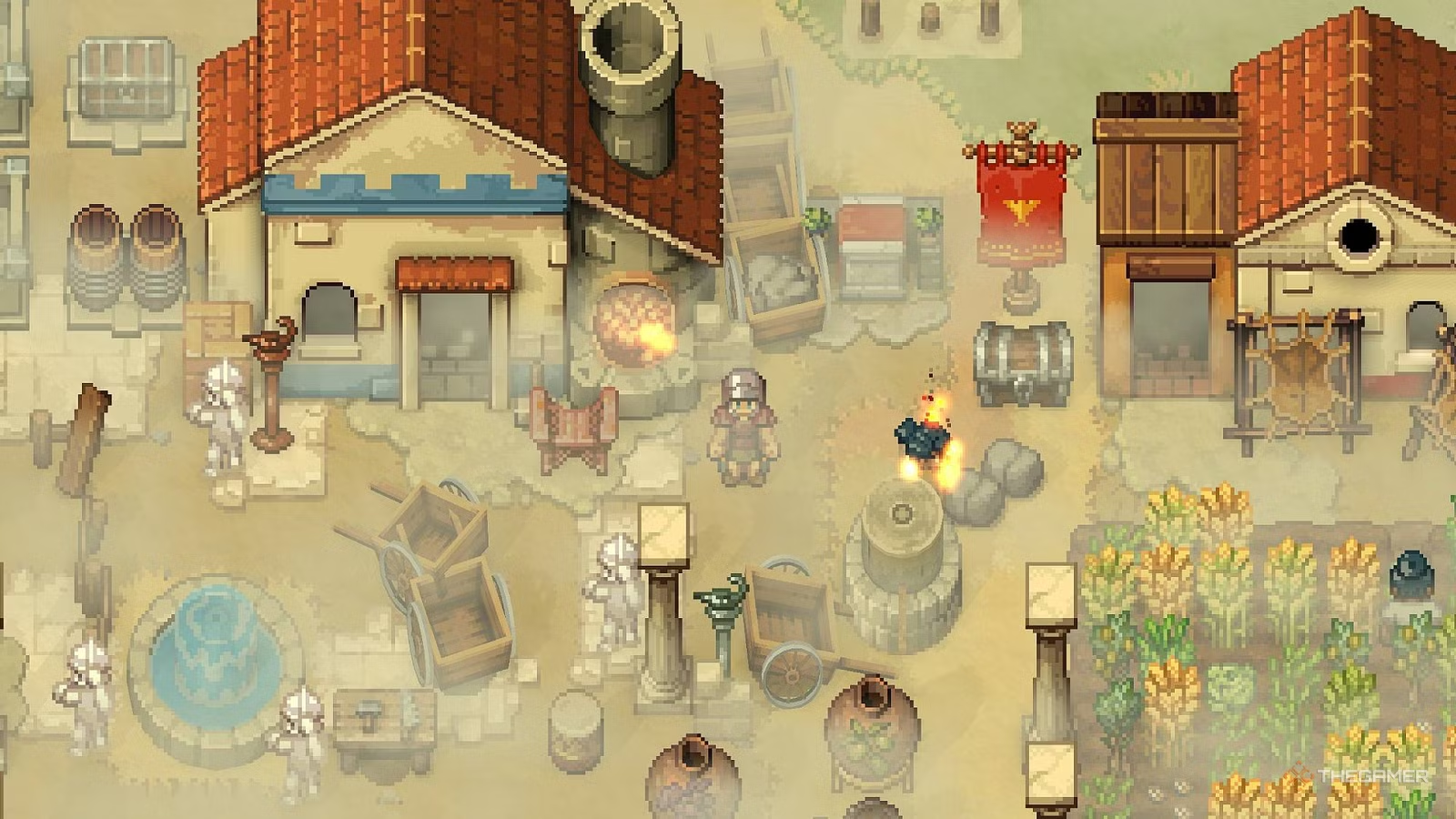
Romestead is a pretty huge game for an early access title and with that comes a lot of complex mechanics that are quite poorly explained. After around 20 hours with the game, I’ve got a pretty good idea of some things I wish I had known when I first started playing, like where to build your base, how to properly keep your citizens happy, and what sort of build to go for.
I’ve got ten tips here to help you get to grips with the behemoth that is Romestead.
Don’t Just Place Your Town Down Where You Spawn
This is the number one thing I wish I had learned before starting my first game. I had just placed my town next to where I spawned and later realized that I wasn’t anywhere near coal, suitable bodies of water for mills, and miles away from both the desert and volcano biome, which made transporting materials a real pain.
Instead, for my next playthrough, I’m going to venture toward the center of the map and place my town there. Perhaps in a spot that crosses the three biomes at once, if possible. That’s my number one piece of advice that will save you so much time.
Later on, you do unlock the possibility to construct a trading post which allows you to move resources between your different towns. But this is late-game tech.
Romestead: How To Get Every God’s Blessing
Here’s the items that each god requires as an offering in Romestead.
Be Wary Of Which Citizens You Are Recruiting

One of the key mechanics of Romestead is how you slowly build up your town. This requires you to venture out into the world and recruit citizens, but not all citizens are made the same. There are two very bad perks: the gluttonous perk, which increases food consumption for the citizen (terrible in the early game), and the disloyal perk, which reduces loyalty gain by fifty percent.
The gluttonous perk is atrocious in the early game because it means the citizen will require a lot more food to keep happy, and food is frustrating to manage at the start of the game anyway. The disloyal perk becomes more annoying later on, as you will need citizens with high expertise to craft legendary items, and having fifty percent less loyalty gain over time really raises the bar for how long it takes to get to +20 expertise.
Don’t make your blacksmith a disloyal citizen, for example. The problem is made worse because citizens must level up individually in the role, which means if you figure this out too late…well, that’s tough.
You Can Respec Your Favors

Don’t worry too much about your build, at least early on. Experiment with the different weapons and scrolls and figure out what stuff works for you. I had success with the dual crossbow build, but there are lots of other ways to play, and later on you will unlock the Canteen of Youth from a level two merchant which can be drunk to reset your favor points anyway.
You can level up the merchant by purchasing goods. I recommend doing this quite early because you will be able to start purchasing health potions. There is no method to craft the base potions in the game currently, so this is the only way to get them outside of finding them in dungeons and camps.
Search For Hidden Chests

A lot of the best loot – like accessories and rare items – are found in hidden chests. There are lots of places where chests might be hiding in plain sight.
- Inside fallen logs.
- Inside monster spawners in dungeons.
- Inside tents.
- Inside bushes.
You can easily find chests by bashing things that look a little out of place. If there is a chest there, the game will produce a magical sound, indicating there is loot to be found.
Maximize Your Gear

I played all of Romestead solo. I’d argue that the game isn’t really in a good shape for solo play, and you will be punished repeatedly if you aren’t geared correctly. You need to upgrade your gear constantly, so move from leather, to copper, to bronze, and later use endgame items like fire scales to produce better armor.
Your citizens have the potential to craft legendary items once they reach an expertise level above 20. Legendary gear is the best in the game, as all pieces come with extra perks. You will probably need to have legendary gear to beat the game as a solo player, because the volcano biome is extremely difficult on your own.
Build Roads

This is another thing that I should have done earlier. Although it’s a bit slow to get started, building roads actually saves you loads of time in the long-run. If you have a clay deposit that is a little far away, build a road. It costs nothing to build a road, and they are very fast to produce.
You can make this even faster by picking up the Road Maker favor, which means for every one tile of road you build, another gets built adjacent to it at the same time. This is a huge time-saver. Worth it because you can just reset your favors later anyway.
Always Carry A Tent

I think a tent ended up being my favorite item in the entire game. You can craft this at the leatherworker and then use it to set your spawn point anywhere on the map when you travel there.
For example, if you’re about to head into a dungeon or boss fight? Just place the tent down outside. When you die, you’ll respawn right next to the entrance to the dungeon, which means you don’t need to run 100 miles to get back to where you were.
Establish Satellite Towns With Level Two Altars

Pretty much everything you do in Romestead is about saving yourself time. There is a lot of tedium you need to get through before life starts to get easier. A prime example of this is fast travel. Once you get to level two altars and unlock the means to teleport, you can now instantly transport yourself between two altars.
You will need to upgrade your altar to level two using the carpenter’s upgrade bench and then unlock fast travel via Mercury by offering plenty of goods. Then you just need to build a new town, a new altar, a new carpenter’s shop, then upgrade the altar…yeah, it takes a lot of time — but it will save you time in the long run, I swear!
Focus On Food Buffs

It took me too long to realize that the reason I kept dying is that I was still just snacking on dead rats. Instead, you need to work on getting some better food produced at your bakery. The issue is that the best food in the game requires so many different ingredients, which means you need to start planning for this right away.
Take this Ischia Marina. It provides lots of health regeneration and natural resistance, but it also requires dates, honey, garum, and strange crab meat. That means you need a date farm, a dolium producing garum, and beehives for honey. It’s quite an involved process, so it’s best to pick one type of food you want to produce and go from there. If you are in a group, this becomes easier.
Get Your Automation Going

Your life becomes significantly easier once you unlock the Logistics tent after defeating the Cyclops boss in the desert. The logistics tent allows you to link up your various buildings to automatically shuffle resources between them. The ideal set-up for food looks like:
- Farmstead producing wheat
- Wheat linked to a watermill that is automatically grinding the wheat into flour
- A watermill linked to a bakery that turns the flour into bread
- The bakery is linked to the food storage, so that it’s filling it with food while you’re out exploring
Likewise, you will want a level two quarry producing coal to keep your buildings filled.
Once you’ve got this set-up, you can start to look at automating the process to make olive oil (which you can sell for a big profit at the merchant), or other automated crafting systems to help you progress.
Romestead: How To Find Tin And Make Bronze
Here’s where to find tin and how to make bronze in Romestead.
