


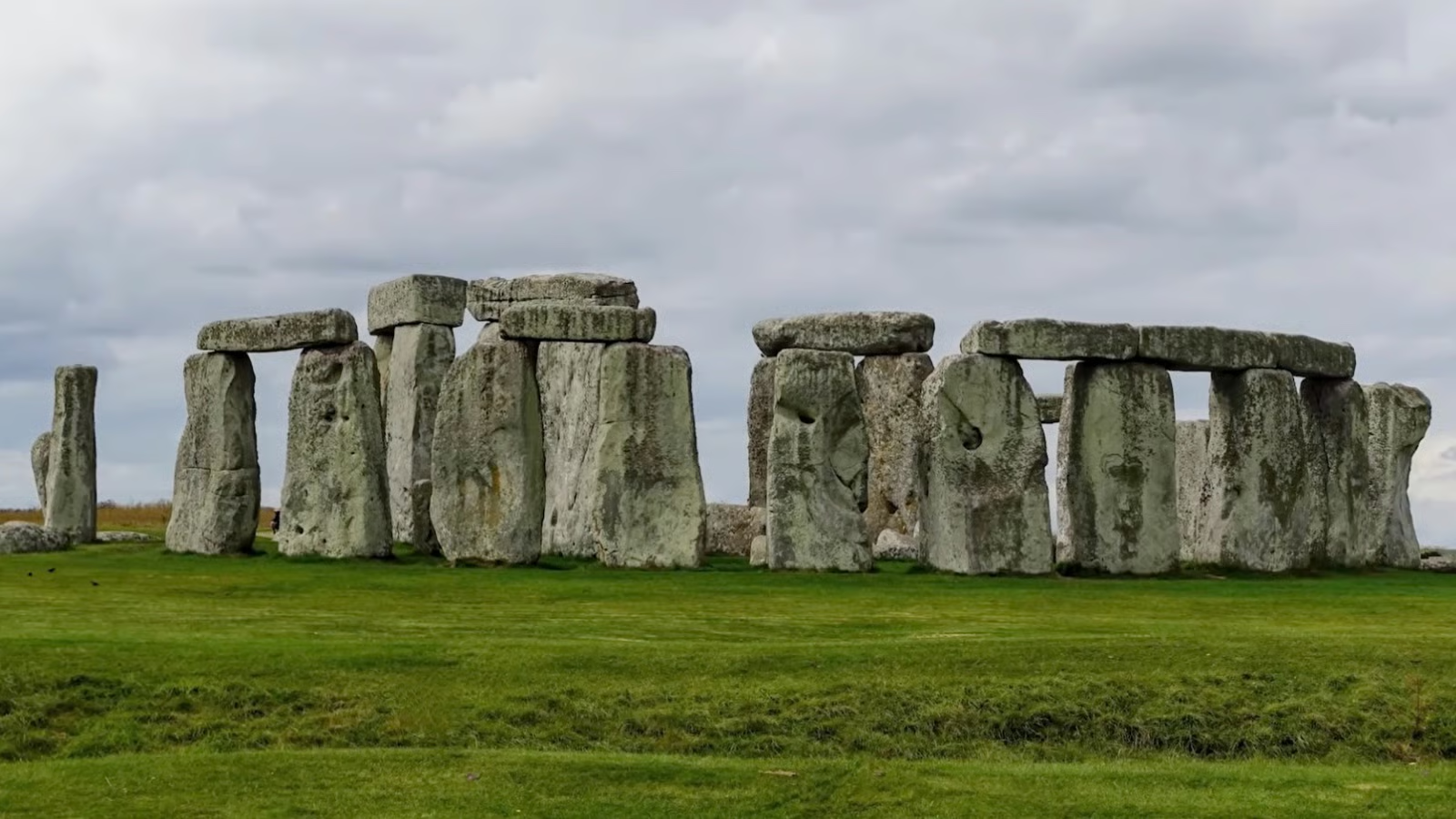
Archaeologists believe they have uncovered a much simpler version of Stonehenge just three miles away from the world-famous prehistoric site, with evidence suggesting it was built around 500 years earlier.
The newly analyzed site, located in the village of Bulford in Wiltshire, England, consists of two large post holes that once held wooden posts aligned with the summer and winter solstices in the same way as Stonehenge. Researchers say the structure dates back around 5,000 years, making it older than the stone monument that attracts thousands of visitors each year.
The discovery is shedding new light on the communities that lived in the area before Stonehenge was built, with archaeologists suggesting the site may have served as an early gathering place tied to seasonal ceremonies and astronomical observations.
Ancient wooden structure mirrors Stonehenge’s solar alignment
The remains of the structure were first uncovered a decade ago during ground clearance work for new military housing in Bulford. However, a detailed analysis of the site’s alignment has only recently been completed.
The two wooden posts, which have long since rotted away, were positioned roughly 120 meters apart and are estimated to have stood between two and four meters high. Archaeologists found that the posts align with the sunrise on the summer solstice and the sunset on the winter solstice.
“I got my pencil and ruler, and I joined them up, and I was aware that they were kind of pointing in the general direction of the sunrise on midsummer,” said excavation leader Phil Harding of Wessex Archaeology.
Dr. Fabio Silva, an archaeoastronomer from Bournemouth University and the Skyscape Academy, said researchers reconstructed the ancient sky to verify the alignment.
“If you take into account the width of the posts… then the alignment is exactly, exactly right. It’s accurately aligned to summer solstice sunrise and winter solstice sunset,” Silva remarked.
The monument dates to the same period as the earliest activity at Stonehenge, when earthworks were first constructed centuries before the iconic stones were erected.
Artefacts suggest prehistoric gatherings took place at the site
Archaeologists also uncovered dozens of additional pits surrounding the posts, containing pottery fragments, flint tools, animal bones, and an antler believed to have been used for digging. The findings helped researchers determine the site’s age through radiocarbon dating.
Among the discoveries was a rare Neolithic flint knife that had been carefully shaped into a disc-like form.
“It was, I think, our star find,” Harding said. “What is so special about it is the workmanship that’s gone into it. That is the work of real craftsmanship.”
Harding noted that the knife was found standing upright in the ground, suggesting it may have held ceremonial significance.
Researchers believe the discovery could reveal where some of the people involved in Stonehenge’s earliest construction phases lived or gathered.
“The discovery of Bulford actually suggests that maybe the people who built the first stages of Stonehenge were based or living there, or at least gathering seasonally to do the construction work at Stonehenge,” noted Dr. Jennifer Wexler, curator of history at English Heritage.
Wexler added that the site’s solar alignment likely reflected the importance of seasonal cycles to early farming communities, whose livelihoods depended heavily on the changing seasons and the return of sunlight after winter.
