


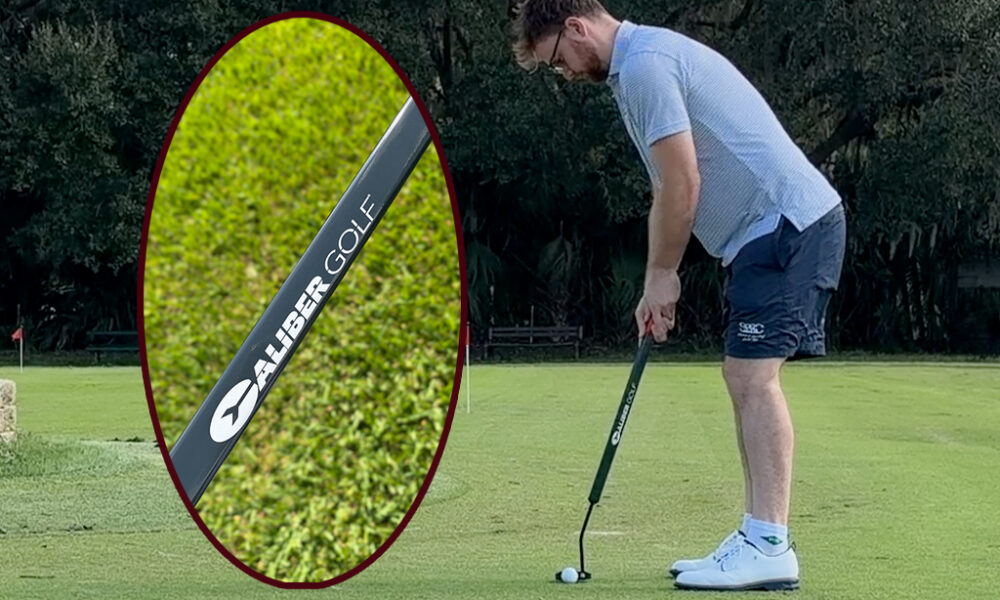
When I first saw Tony Finau putting with what looked like a giant grip, I was intrigued. A closer look revealed what he was actually using, and I immediately wanted to take it for a spin. Finau sparked a Tour trend during his first start of the FedExCup Fall by gaming the Caliber Golf “hockey stick” putter shaft. With players like Ben Silverman following suit, the gear needed a proper test in true GolfWRX fashion.
Caliber Golf isn’t an ordinary putter company. Combining a passion for hockey and golf, founder Tim Wright developed the first-ever fully integrated putting grip and shaft conforming to the Rules of Golf in 2018. Since then, the brand has made its way into PGA Tour bags, built around the promise of stabilizing the putting stroke.
As a Philadelphia Flyers fan, I also wanted to see if testing this would give me any shot at making the roster, given how their season started. The less said about that, the better. Here is what happened once I actually put the club in play.
Keeping everything square through the stroke
Rolling the first few putts with the Caliber shaft made its stability obvious. The rectangular geometry of the gripping area significantly reduces unwanted wrist breakdown. A simple shoulder rock starts the ball on its intended line consistently.
The shaft feels lighter in the hands than it looks, preserving good feedback from the putter face throughout the stroke. I paired it with a Sub 70 Sycamore 010 mallet, which accentuated the head weight nicely.

Simpler alignment at address
Because the shaft mirrors that of a hockey stick rather than a traditional putting grip, squaring the hands to the face at address feels intuitive. The flat sides naturally keep your palms aligned with the putter face.
With the narrow top edge of the grip, it offers a golfer an instant visual check. If the face isn’t square to your target line, any twist in the shaft shows the side walls immediately.
One note on setup: using the Sub 70 Sycamore 010 mallet, the double-bend hosel creates noticeable offset. If you aren’t accustomed to that look, gauging how far forward to press your hands takes a short adjustment period.

Versatility for different grip styles
I’ve putted traditionally, using a right-hand-low grip, with a slight overlap for most of my life, so that is where I started. Getting used to the profile took a few strokes – it is narrower side-to-side than a standard grip, but significantly deeper front-to-back.

What makes the shaft compelling is how easily it accommodates alternative setups. Want to hold it like an actual hockey stick? Split your hands down the shaft. Doing so promotes noticeable face rotation, which suits players who favor a stronger stroke arc.
I also choked down on the shaft to create a makeshift counter-balanced setup. Because the shaft itself is lightweight, adding lead tape to the butt end enhances counterweighting and creates even more stability through impact.

The bottom line
If you’re a strict traditionalist, this setup might not suit your eye. Standing over the ball and settling into a grip style requires an open mind, and because the shaft acts as the grip, there is no conventional rubber or leather wrap. My next tweak will likely be adding a strip of grip tape along my primary hand placement.
If you struggle on the greens, the Caliber shaft is well worth a look. Beyond the mechanical perks of face awareness and wrist quietness, it injects genuine fun into practice. Sometimes shaking off technical swing thoughts on the green is just as valuable as grinding mechanics. Whether you mess around with it on the practice green to dial in face control or put it straight into play, it is an effective tool to quiet the mind and free up your stroke.
