
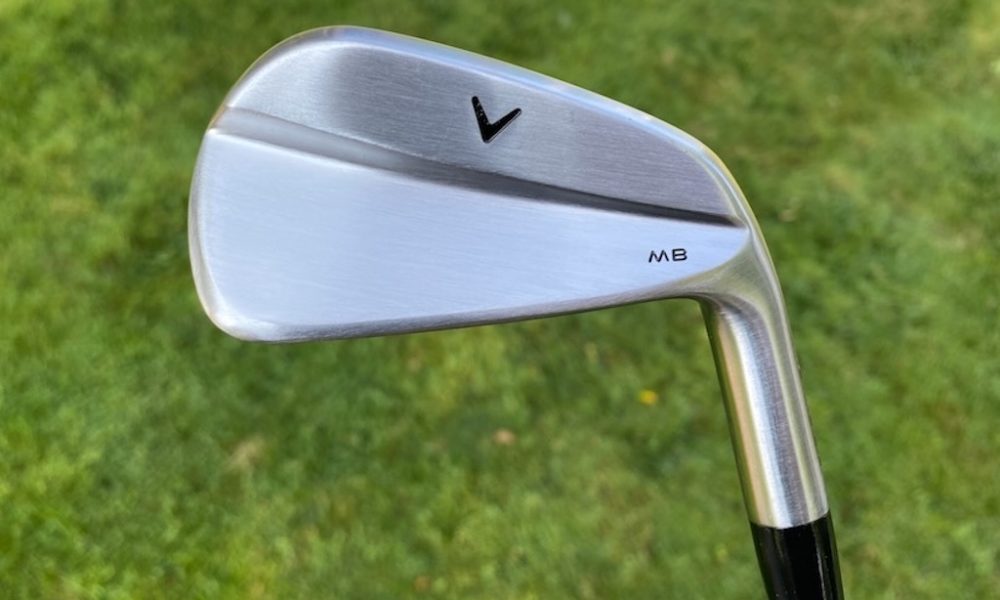
The long-awaited Callaway prototype muscle-back irons, spotted in the bags of Sam Burns, Min Woo Lee, Nicolai Hojgaard, Si-Woo Kim and other big-name stars on the PGA Tour, are prototype no more. Callaway announced Tuesday the introduction of the new Apex MB Tour Raw irons in extremely limited quantities.
The origins of the Apex MB Tour Raw irons started over a year ago, when Callaway took an audit of what made other irons so successful on Tour, like its X Forged cavity backs.
“With that, we decided we were going to do a whole rework on our muscle back,” said Ryan Ritchie, Callaway’s senior manager of irons R&D. “We knew we had some work to do and we established that the muscle back sort of needs to lay the foundation for our Tour product. And we didn’t feel like the current muscle back we had necessarily did that.”
“…the first thing we did is we established who are our main muscle back players. From there, we took all our muscle back players and narrowed it down to which muscle back is played the most.”
One of those was Lee, who first tested the irons back at the start of 2025. He loved them so much, they were in the bag instantly, and he went on to win with them that year in Houston. Now, according to Jacob Davidson, Callaway’s vice president of Global Product Strategy, the Apex MBs have “been our number one played iron on the PGA Tour most weeks.”
Diving into the tech, the modern muscle back uses a one-piece forged design from 1020 Steel to deliver pure feel, shot-shaping control and precision demanded at the highest level of the game, which is already game-proven by Lee.
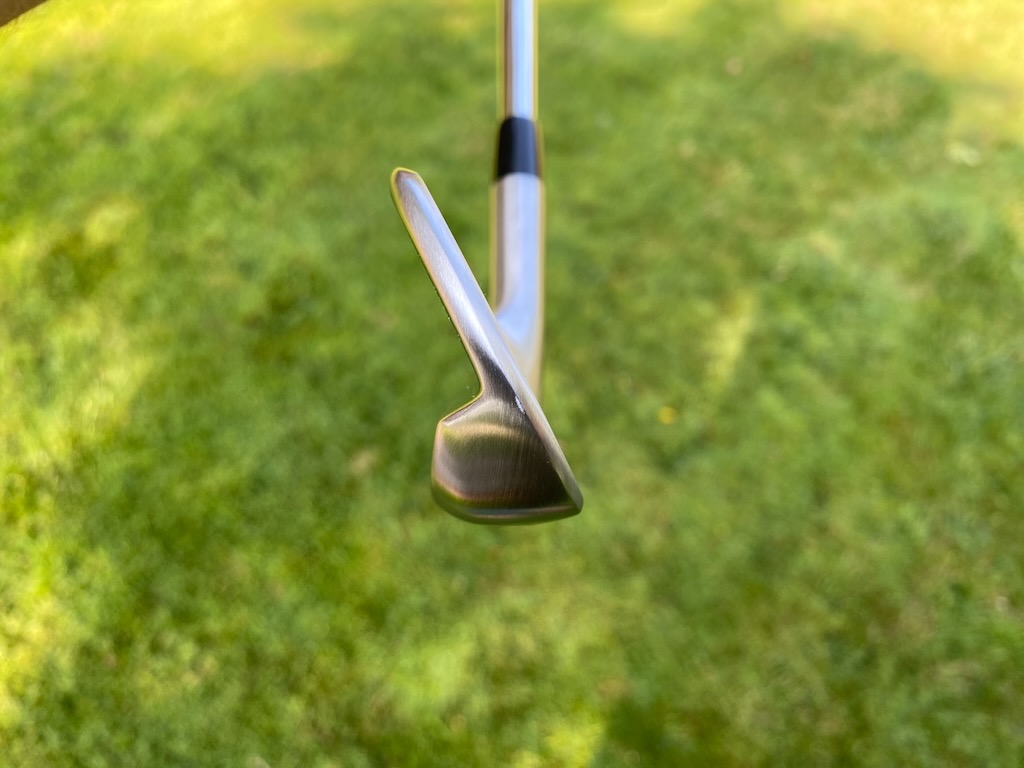
The club’s biggest drawing point for players on Tour is the tri-sole design, which has been refined through direct tour feedback. The tri-sole design with beveled leading and trailing edges glides cleanly through the turf, which promotes more consistent strike and improved interaction.
“The first thing you’ll notice is for a muscle back, it has a pretty wide sole,” Ritchie said. “But as you start digging in, you’ll notice that there’s things about the sole that make it play like a narrow sole.”
Starting with the leading edge on this tri-sole, it sees a full band that goes from up the hosel down the front of the toe to create relief in areas where players need it most, either from hitting out of the rough or due to a swing that is faster on the toe side.
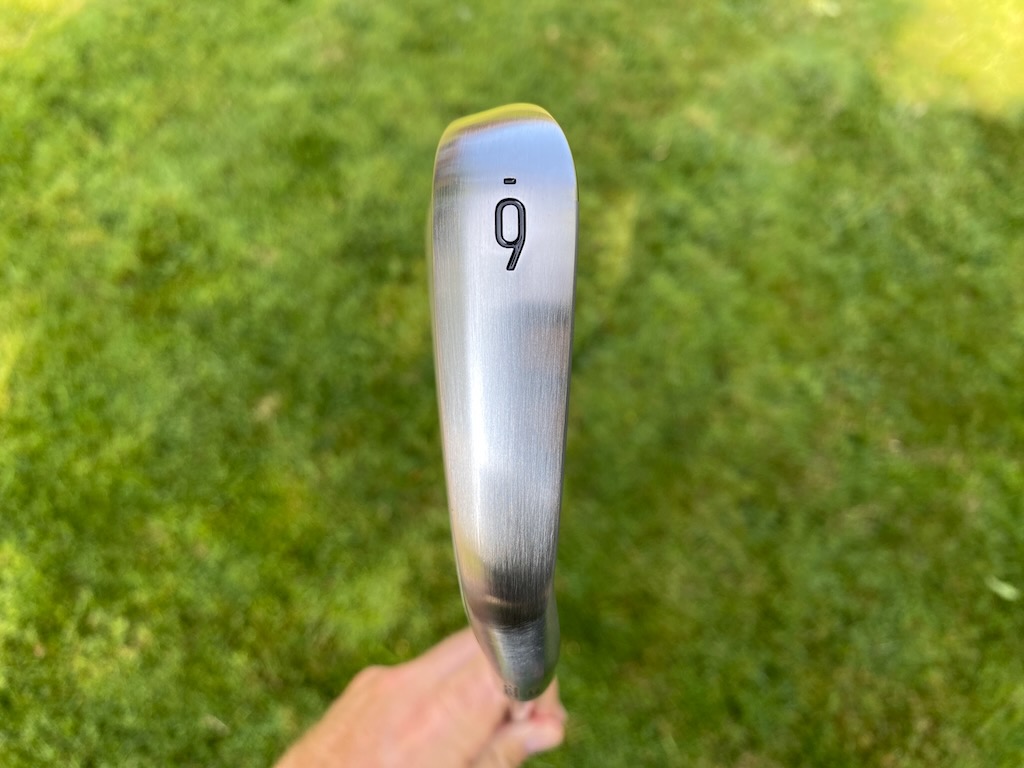
“It’s creating that relief, it’s allowing it to move faster through the turf than if you didn’t have, say, that leading edge relief that we have on there now,” Ritchie added.
The club also features a more-playable sole area which is more reflective of what a traditional muscle back looks like, to help players hit different shot shapes and flight the ball higher or lower.
The final part of the sole is the extended trailing edge, which Ritchie says, is “relieving all that material to allow the club to really release through the turf, through rough, and really be fast and play like a classical muscle back, but it has the modernization of this wide sole to give you a little bit more help and stability.”
Looking at the club, the muscle back has a thicker top line than found on other traditional muscle back heads, but it does look thin like a traditional muscle back thanks to a few design techniques.
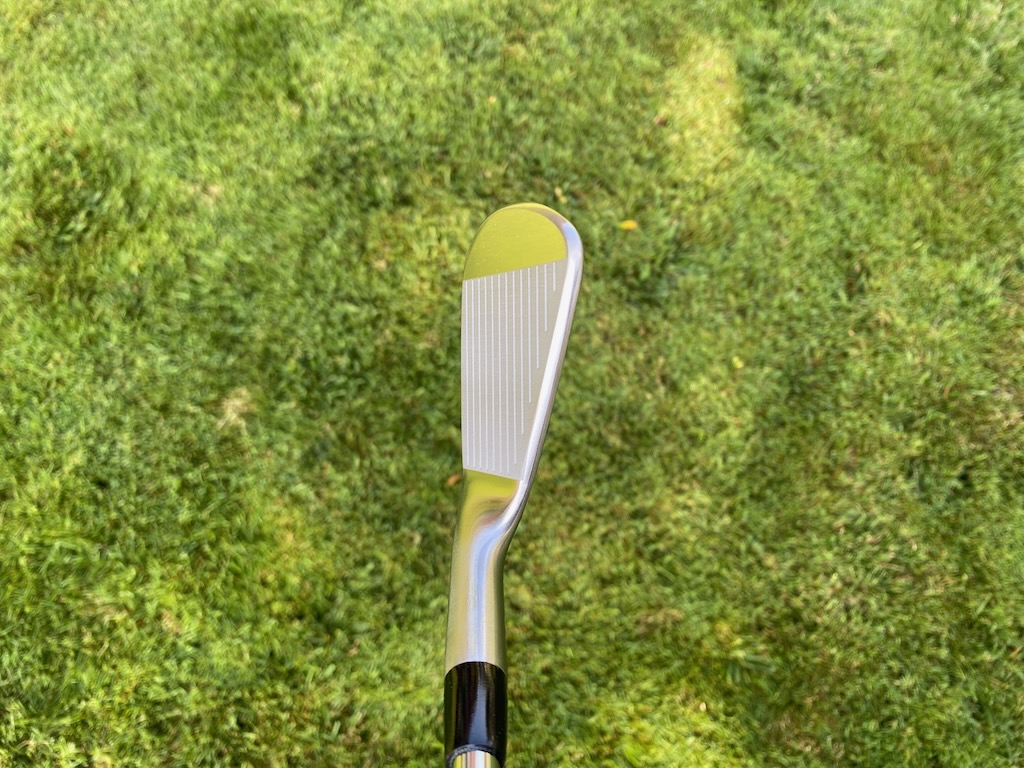
“We’ve done a little bit of geometry tricks to alleviate that thickness in the top line,” Ritchie said. “However, it helps players have better performance and consistency up and down the face. So, to maintain some of these shapes, we do a 360-mill cut around the entire face perimeter. This allows us to maintain that true, precise shape that our players are looking for, while also creating this other secondary chamfer on the leading edge, which allows the blade to really get into the turf faster and quicker with less friction.”
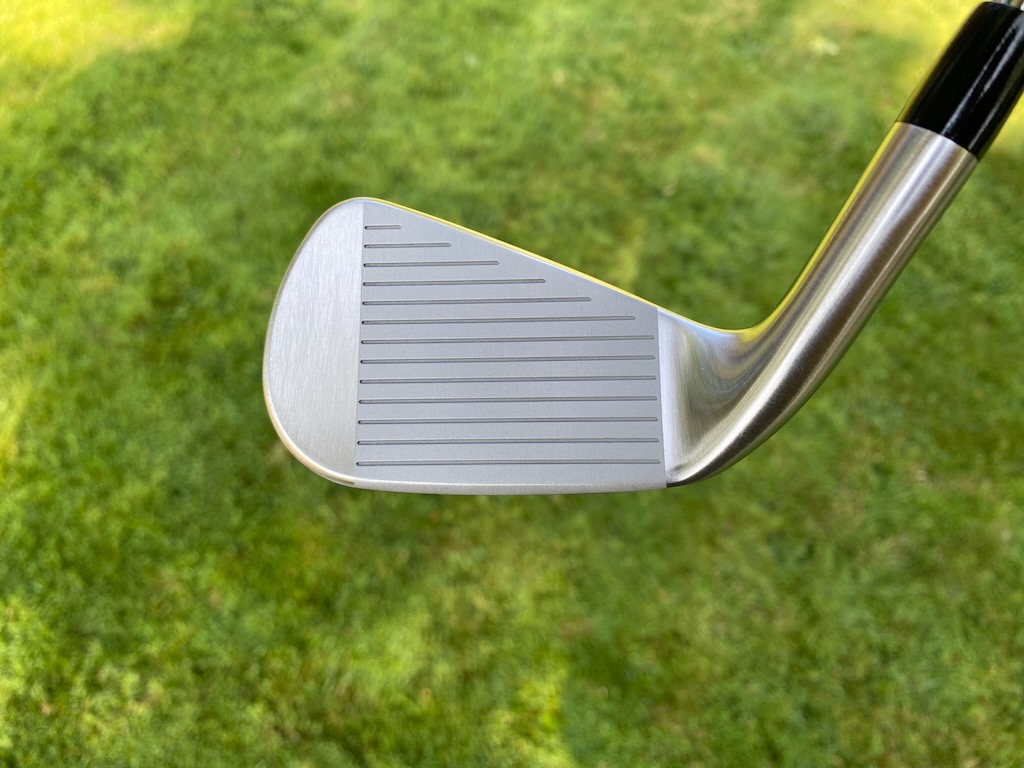
Each head features a raw finish, which Callaway believes provides unmatched feel and feedback, and will naturally develop rust and patina over time for a uniquely personal look.
The Apex MB Tour Raw irons are available at $1,599.99 for a seven-piece set.
Full specs below.
| CLUB | Loft | Lie | Length | Offset (mm) |
| 4 | 23° | 60.5° | 38.50″ | 2.54 |
| 5 | 26° | 61° | 38.00″ | 2.36 |
| 6 | 29° | 61.5° | 37.50″ | 2.16 |
| 7 | 33° | 62° | 37.00″ | 1.91 |
| 8 | 37° | 62.5° | 36.50″ | 1.65 |
| 9 | 41° | 63° | 36.00″ | 1.40 |
| 10 (P) | 45° | 63.25° | 35.75″ | 1.27 |
