


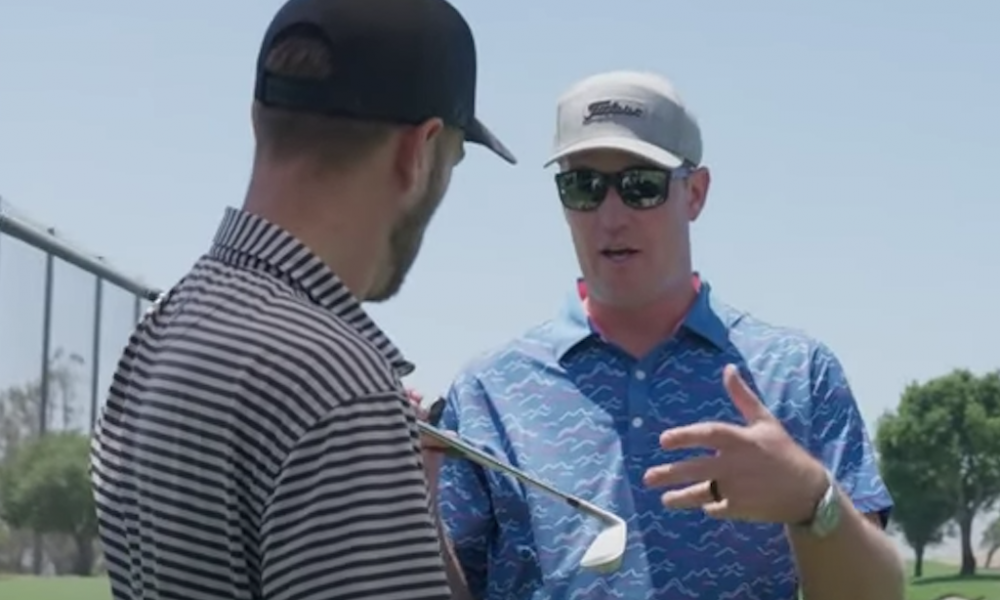
Golfers love to blame the swing. Sometimes they should. As a PGA Professional and coach, I have spent nearly three decades helping players improve technique, strategy, practice habits, confidence and scoring skills. There are plenty of times when the answer really is better fundamentals, a clearer concept or more purposeful practice.
But there are also plenty of times when the swing is not the only problem.
I have watched golfers fight ball flights, distances, misses and inconsistencies that were being made worse by equipment that simply did not fit them. The club was too long. The shaft was too heavy. The lie angle was wrong. The loft gaps made no sense. The putter did not match the player’s stroke. The driver looked great on the rack but produced the same miss over and over because it was never right for that golfer in the first place.
That is why fitting matters. Not because every golfer needs to chase the newest release, spend thousands of dollars or rebuild the entire bag every season. Fitting matters because golf is hard enough when the equipment is working with you. It becomes a much steeper climb when the equipment is quietly working against you.
A Fitting Should Not Be a Sales Appointment
The first thing golfers need to understand is that a true fitting is not simply a shopping trip with a launch monitor. A quality fitting should be a performance evaluation, a conversation and an education.
The fitter should want to know who you are as a player before handing you new equipment. How often do you play? What is your typical miss? What shot makes you uncomfortable? Are you trying to gain distance, improve dispersion, hit the ball higher, manage a physical limitation or simply build a more reliable set makeup? Those answers matter because the same club that helps one golfer can be completely wrong for another.
Sometimes the best result of a fitting is a new driver, iron set or putter. Other times, the answer might be adjusting loft and lie, changing a shaft, shortening a club, reworking wedge gaps or simply confirming that what you already have is pretty close. A good fitter should not be afraid to tell you that you do not need to buy something.
That kind of honesty is one of the clearest signs you are in the right place.
Every Golfer Can Benefit From Being Fit
One of the most damaging myths in golf is that fitting is only for elite players. I have heard it countless times from beginners, high-handicap players and recreational golfers who say, “I am not good enough to get fit yet.”
That thinking has it backward.
Better players may be more consistent, which can make the fitting process more precise, but less experienced players often have even more to gain because their equipment is frequently farther from ideal. A beginner with clubs that are too long, too heavy or too unforgiving may develop compensations that follow them for years. A junior with poorly matched clubs can struggle to create speed or sequence properly. A senior golfer using equipment that no longer fits their body, speed or launch needs may assume they are simply “losing it” when the set is doing them no favors.
No fitting can replace instruction, practice or athletic development. But properly fit equipment can remove unnecessary obstacles. It can help a golfer launch the ball better, control start lines, improve contact, manage distance gaps and feel more comfortable over the ball. For many players, that is not a luxury. It is part of the improvement process.
Technology Is Powerful, But It Is Not the Fitter
Modern launch monitors have made club fitting better than ever. Tools like FlightScope, Foresight, TrackMan and other systems allow fitters to measure what used to be mostly guesswork. Ball speed, launch angle, spin rate, descent angle, carry distance, dispersion, attack angle, face-to-path, dynamic loft and strike location all help tell the story.
But data is only useful when it is interpreted correctly.
A launch monitor can show what happened, but an experienced fitter has to understand why it happened and what to do with that information. The numbers might show improved ball speed with a certain shaft, but the golfer may feel like they have to work too hard to time it. Another option might be slightly shorter on peak distance but far better in dispersion, consistency and confidence. For the majority of golfers, that second option is often the better golf club.
The best fitters blend objective data with human feedback. They listen to what the golfer says about feel, weight, balance, look, sound and comfort. They pay attention to tempo, transition, physical limitations and tendencies. Fitting is not just about finding the longest shot of the day. It is about finding the club that produces the most playable pattern over time.
Do Not Show Up Married to a Brand
Golfers often walk into fittings with a decision already made. They saw a commercial, read a review, watched a Tour player win with something or hit their buddy’s driver once and decided that was the club.
That is understandable. Gear is fun. Golf equipment marketing is everywhere, and the major manufacturers are making outstanding products. But if you go into a fitting determined to prove that one specific club is “the one,” you may miss the best answer.
A proper fitting should be brand-neutral whenever possible. The golf ball does not care what logo is on the crown, sole or hosel. It only reacts to impact. Your job is to keep an open mind, and the fitter’s job is to show you what performs best for your swing and your goals.
That does not mean personal preference is irrelevant. Some golfers simply do not like the look of certain shapes, offsets, toplines or finishes. That matters because confidence over the ball matters. But preference should guide the process, not control it from the start.
The Do’s of Getting Fit the Right Way
There are a few things golfers can do to make a fitting far more productive. These sound simple, but they make a real difference.
Do bring your current clubs. A fitter needs a baseline. Without seeing what your current equipment does, it is much harder to know whether something new is actually better.
Do explain your real goals. “I want more distance” is fine, but be more specific if you can. Do you need higher launch? Less curve? Better misses? More predictable wedge gaps? A putter that starts the ball on line more often?
Do arrive physically ready. Warm up, hydrate and schedule the session when you can make representative swings. Do not book a serious fitting when you are exhausted, injured or have not touched a club in weeks.
Do ask questions. You should leave understanding why a recommendation was made. If you cannot explain the reason behind a shaft, head, loft, lie or length recommendation, the fitting did not educate you enough.
Do pay attention to dispersion, not just distance. The longest shot of the session is not always the best club. The tighter pattern is often the one that lowers scores.
Do consider the whole bag. Driver gets the attention, but irons, wedges and putter fitting may save more strokes for many golfers.
A good fitting should make you feel more informed, not more confused. Even if you do not buy anything that day, you should leave with a clearer understanding of your equipment and how it affects your game.
The Don’ts That Get Golfers in Trouble
Just as important as what to do is what to avoid. Many golfers sabotage the fitting before it ever has a chance to help.
Do not chase Tour setups. Tour players are extraordinary outliers. Their speed, delivery, strike patterns and preferences are not the same as yours.
Do not buy based only on one perfect shot. Every golfer can hit one great shot with almost anything. Look for patterns.
Do not ignore feel. If the numbers look good but the club feels terrible, that matters. You still have to swing it on the golf course.
Do not assume more expensive means better. Premium shafts and custom options can be great, but only if they actually improve performance.
Do not rush the process. A fitting should not feel like speed dating with golf clubs. You need enough swings to see tendencies, but not so many that fatigue takes over.
Do not forget gapping. A set is not just a collection of clubs. It should function as a system.
The last point is especially important. I have seen plenty of golfers with a driver they love, irons they tolerate, wedges that overlap and a hybrid or fairway wood setup that leaves a huge distance hole. That is not a complete bag. That is a random assortment of clubs.
Driver Fitting Gets the Headlines, But Scoring Clubs Matter
The driver is the most exciting fitting because distance is fun and the numbers are easy to understand. Ball speed goes up, carry distance improves and everyone smiles. There is nothing wrong with that.
But the clubs closer to the hole often deserve just as much attention.
Iron fitting affects launch windows, turf interaction, distance control and directional consistency. Wedge fitting influences gapping, bounce, grind, trajectory and short-game versatility. Putter fitting can address length, loft, lie, head shape, alignment, toe hang, face balance and how the ball actually starts on line.
For the average golfer, a well-fit putter or properly gapped wedge setup may have more scoring value than five extra yards off the tee. That is not always as exciting in the hitting bay, but it often shows up faster on the scorecard.
Indoor, Outdoor or Both?
Golfers often ask whether it is better to be fit indoors or outdoors. The honest answer is that both can work when the fitter knows what they are doing and the technology is reliable.
Indoor fittings provide controlled conditions and clean data. You do not have wind, temperature changes or range-ball variables affecting the numbers. Outdoor fittings let the golfer see actual ball flight, which can be incredibly valuable for confidence and trust. Some players simply need to see the ball fly before they believe what the numbers say.
The best scenario is a blend of both, but that is not always realistic. If you are indoors, make sure strike, launch, spin and dispersion are being evaluated carefully. If you are outdoors, make sure the fitter is not relying only on eyesight and guesswork. Either way, the process should be thorough.
Red Flags During a Fitting
Not every fitting experience is created equal. Golfers should be comfortable asking questions and paying attention to how the session is being run.
Be cautious if the fitter never asks about your game, does not test your current clubs, only pushes one manufacturer, refuses to explain the data, ignores your feedback or seems more interested in closing a sale than solving a problem. None of those things automatically mean the recommendation is wrong, but they should make you pause.
A strong fitter should be part technician, part teacher and part problem-solver. They should be able to explain what they are seeing in plain language. They should be willing to test, compare and adjust. Most importantly, they should be focused on your performance, not simply moving product.
My Bottom Line
Golfers will always search for answers. They will look for them in lessons, practice plans, swing videos, fitness programs, mental-game work and course management. All of those things matter. I have built much of my professional life around helping golfers improve through coaching and education.
But equipment matters, too.
A proper fitting will not magically fix every flaw in your swing. It will not turn a slice into a Tour draw overnight or replace the need to practice. What it can do is give your swing a better chance to produce the shot you are trying to hit.
That is the point.
The best club is not the newest club, the most expensive club or the one your favorite player uses. The best club is the one that fits your swing, your body, your tendencies, your goals and your game.
Golf is hard enough. Do not make it harder by guessing.
