


UFC’s Heavyweight division has been in dire straits since Francis Ngannou left with the title nearly five years ago.
While “The Predator” skipped off to make bank in the boxing ring, the division tried to move forward. Jon Jones effortlessly submitted Ciryl Gane to capture the newly vacated belt, and then a combination of injury and blatant ducking kept the title in effective purgatory for two years. Meanwhile, Tom Aspinall was busy establishing himself as the new best Heavyweight on the roster … only for Gane to eye poke him so severely that his career might be over.
Once again, the division tried to move forward. Herb Dean controversy notwithstanding, Gane smoked Alex Pereira to win interim gold, a title that was quickly promoted to the undisputed belt in Aspinall’s absence. Subsequently, we have an undisputed champion who has thrice fought for the belt without ever actually winning it.
Like Joshua Van after the Alexandre Pantoja injury, Gane is now in a position where he must legitimize his own title. After Van’s incredible war versus a worthy challenger in Tatsuro Taira, nobody was questioning his claim to gold, and Gane surely hopes a similarly violent win will quiet his detractors … but he’s facing an uphill battle.
The X-Factor in all this is his opponent, Josh Hokit.
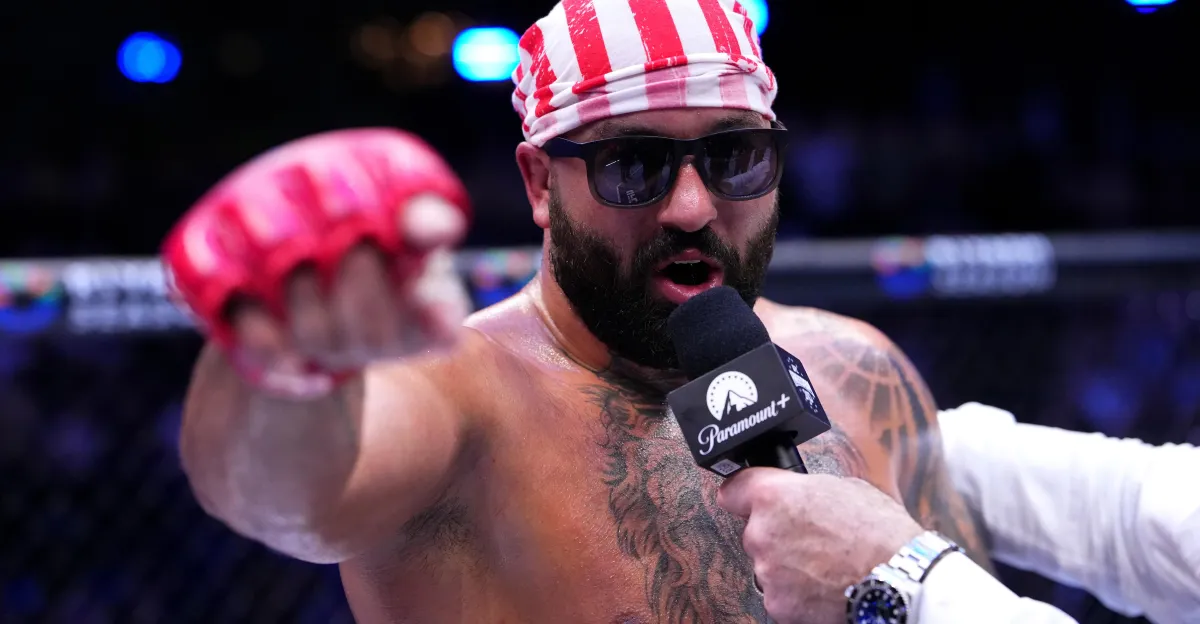
Less than a year ago, Hokit was the UFC 324 curtain-jerker, manhandling the unheralded Denzel Freeman for his second promotional win and second performance bonus. He was still unknown to the general fanbase, though his post-fight antics were starting to build a following and creating backlash. Whether for or against “The Incredible Hok,” beating up Freeman scored him an absolutely massive jump in competition versus Curtis Blaydes.
Less than three years into his professional career, Hokit went to war with a former world title challenger. It was not an easy fight. The current “Fight of the Year” frontrunner saw Hokit taken down, rocked, and exhausted. A large majority of prospects — let alone Heavyweight prospects — do not persevere through such adversity, and yet Hokit looked comfortable in the chaos. He dug deep, pushed his hand speed advantage, and deservedly took home the victory.
Just like that, the newcomer was an elite contender.
Trouncing Derrick Lewis at the White House was fun but meaningless; Hokit scored this title shot by defeating Blaydes in spectacular (but competitive) fashion. That’s his resume. Compared to the likes of Alexander Volkov — who has been consistently beating the best Heavyweights on the roster for years now — it’s rather thin.
There’s also the concerning fact that Hokit is quite small for the division. He’s 6’1” and built more like Quinton Jackson than Mark Hunt. I actually have a close friend who wrestled Hokit multiple times in middle and high school, and he could make Bantamweight! Even after bulking up in his NFL bid, the simple fact of the matter is that Hokit is not a full-sized Heavyweight, considerably smaller than Cain Velasquez, the “economy-sized” Heavyweight of a decade ago.
Despite the size and experience concerns, it’s Hokit who could potentially save the division at UFC 334.
Imagine if he comes through as the underdog, producing a 28-year-old undefeated Heavyweight champion. That’s the kind of fighter the UFC would love to build a division around. There would be all kinds of fresh matchups available for Hokit. You could slot him versus Volkov, a returning Tom Aspinall, or even book the Blaydes rematch tomorrow.
Hokit would be a genuine breath of life into the stagnant division, because he doesn’t carry the same baggage as Gane. Sure, the character work is annoying, but no fight fan would turn their nose at the idea of an active young champion with an entire division standing against him.
Want to bring Heavyweight back to life? Perhaps a fiery Middleweight shit-talker is just the ticket.
