


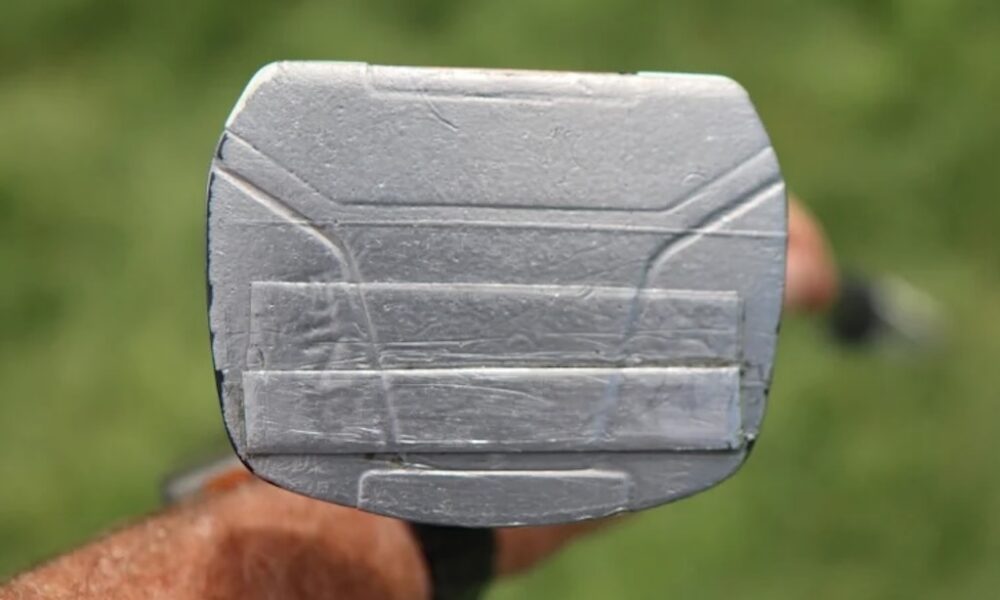
Lead tape and putters. We have seen it for years and know the main reason. More weight to feel the clubhead over the ball. But lead tape is applied for other reasons, too.
Here are a few.
Adding More Weight
The most common practice we see when it comes to lead tape is adding more weight. Personal preference and feeling the putter head at address and through the stroke is number one. After all, it is a game of feel. Sometimes putters feel great in the pro shop or on the practice green. Then when you get on the course, the putter feels too light. Add in the scenarios of a round with your buddies in a match or the scale of a professional tournament, and there needs to be more weight.
Applying tape to the sole of the putter is the most popular option; usually, starting close to the putter face is a good way to add more mass forward. The back cavity is another popular spot on a blade putter, depending on how much the player needs.
At Address
Each putter sits differently at address. Sometimes it fits the player’s eye; sometimes it’s just not to spec. Enter lead tape. Here, the player can adjust how the putter looks at address by adding tape to the bottom in a certain position. Beauty is in the eye of the beholder here, so it is all personal preference.

An example here is Joel Dahmen with adding just a slight amount of tape on the bottom of the Jailbird putter. This isn’t adding much weight from a feel perspective, but it changes the look slightly to his eye of how this putter sits at address.
Combination of Looks & Feel
Wyndham Clark’s caught my attention here for a combination of both versions of lead tape added here. Adding overall weight to the putter with a couple more strips on the back half of the sole. This just helps complement the look of the putter he sees at address. All player preference for sitting square, or maybe even slightly open or closed. All of this takes time to figure out what fits your game and style when it comes to your putting setup.


