


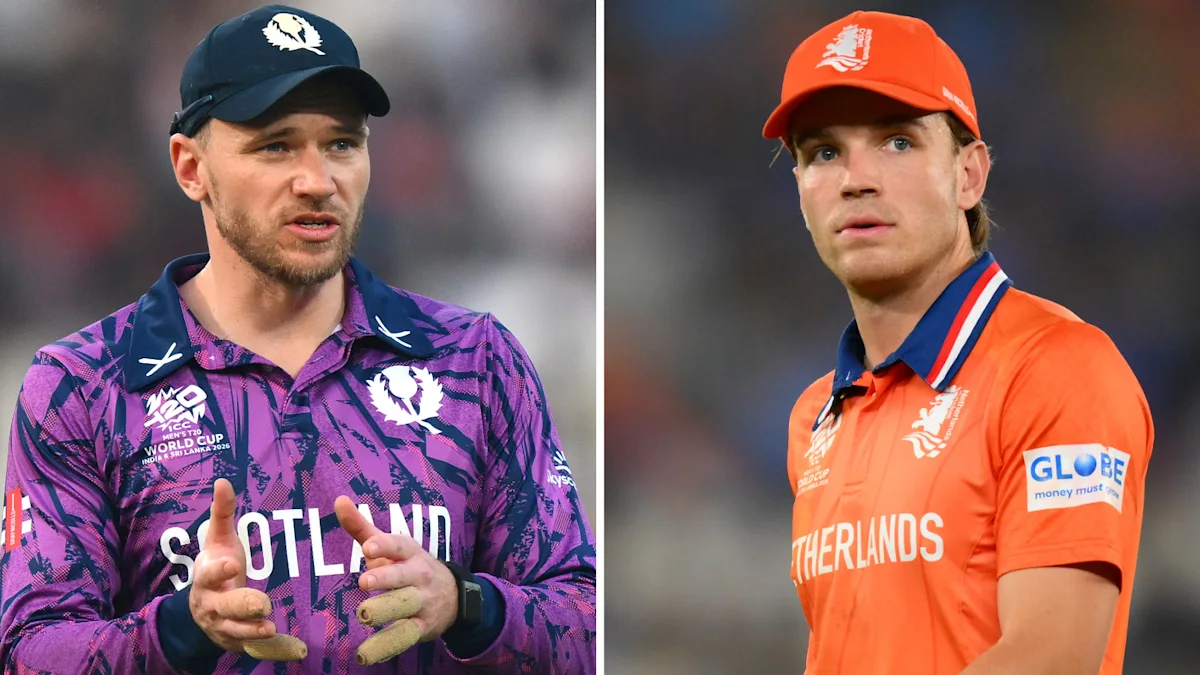
The cricket boards of Scotland and the Netherlands have criticised the International Cricket Council for structural changes made to the men’s 50-over World Cup.
Last month the ICC announced the main part of the tournament for 2027 would be 12 teams in two groups of six, rather than 14 as originally planned.
Advertisement
The three lowest-ranked qualifiers will instead be placed in a preliminary three-team Super Series, from which only the winner will progress.
It effectively means the likes of Scotland and the Netherlands face three qualifying tournaments to reach the main group stage of the World Cup.
A joint statement from Cricket Scotland and Royal Dutch Association (KNCB) said they had “significant concerns” about the “impact of these changes” along with the “process through which they have been introduced”.
“The changes risk weakening the integrity and credibility of international cricket, and only highlights the importance of strong governance, transparent decision-making and effective engagement with members,” the statement said.
Advertisement
“Changing those structures at short notice creates significant uncertainty, disrupts planning, and places additional operational and financial pressure on organisations that are already operating with limited resources.”
BBC Sport has approached the ICC for comment.
The changes to the World Cup were agreed during meetings at the ICC’s annual conference held in Edinburgh in June.
However, BBC Sport understands nearly all associate members were kept in the dark over the changes despite being present at the conference.
Cricket Scotland and the KNCB said they remain “fully committed” to “working constructively with the ICC”.
Advertisement
But the two boards accused the global governing body of being “disrespectful” in how they have handled some of the discussions following the announcement.
“Cricket Scotland, KNCB and other associate members met twice with the ICC, seeking official written communication on the changes and greater clarity around the processes involved,” the statement added.
“We also requested positive action to strengthen future operational decision-making and an invitation to bilateral planning meetings with full members.
“Since the second meeting more than two weeks ago, there has been no further response from the ICC, which is disappointing and disrespectful given the significance of the issues raised.”
Advertisement
The joint statement follows concerns raised by the World Cricketers’ Association last month over the decision.
‘Sends entirely the wrong message’
Scotland and the Netherlands are the two highest ranked associate members.
Their decision to issue such a pointed statement reflects frustrations outside of full members with aspects of ICC decision making.
BBC Sport understands proposals were tabled at the 2025 ICC annual conference to create a single-class of membership, rather than having associate and full members, but it did progress.
The statement added that the changes to the World Cup qualifying were a “setback” for associate members and “risk undermining the progress made in recent years to grow the global game”.
Advertisement
“At a time when cricket is seeking to expand its reach, attract new audiences and strengthen its position on the international sporting landscape, reducing meaningful opportunities for emerging nations sends entirely the wrong message,” it said.
The statement also called on the ICC to “re-engage with associate members” and to do so “openly” to enable the sport to develop outside of full members.
“Leaders in cricket have consistently spoken about their ambition for the sport to become truly global,” added the statement.
“Providing meaningful opportunities for emerging nations to qualify for, and compete at, major events is fundamental to achieving that ambition.
Advertisement
“Decisions that reduce or limit those opportunities slow the progress being made to expand the game’s reach and appeal and runs counter to those ambitions.”
